
Tape-ball cricket: formats, team sizes and how a night game works
Why tape-ball took over evening cricket in Pakistan, which formats fit an hour, and the local rules worth agreeing before you start.
· 6 min read
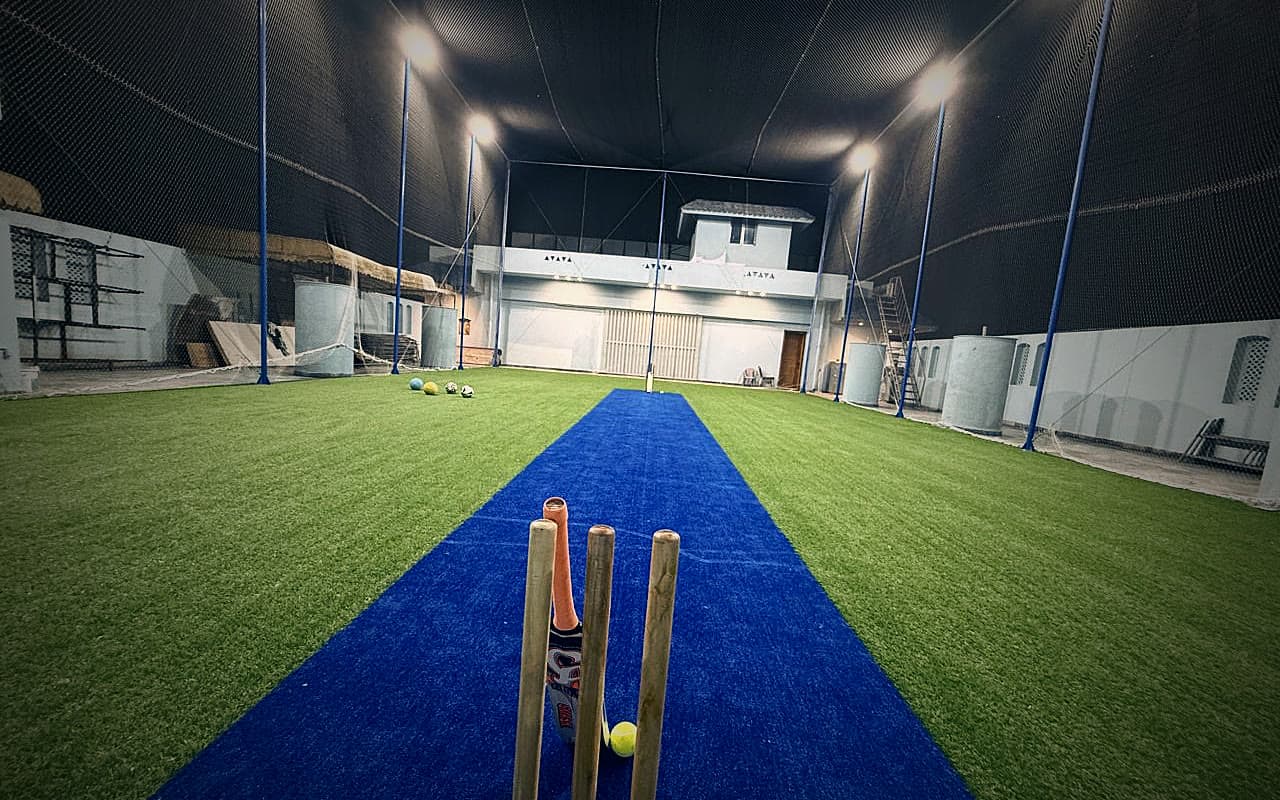
Tape-ball is not a watered-down version of cricket in Pakistan. It is the version most people play, most weeks, and it has its own conventions that nobody ever writes down — which is why a mixed group's first game usually stops twice in the first three overs to argue about a rule.
Here is the short version of how it actually works.
Why a taped tennis ball won
Wrapping electrical tape around a tennis ball makes it heavier, faster off the surface and far more predictable in the air than bare tennis. It also makes it safe enough to face without pads, which is the whole point.
- No kit barrier. One bat between a group of twelve, and nobody needs pads, a helmet or a box to take part.
- It suits floodlights. A taped ball is easier to pick up under lights than a hard ball, which is why night cricket and tape-ball grew together.
- It is kinder to a turf surface, and to the people fielding on it.
- Less tape means more swing. Half-taping one side is a genuine skill and an accepted tactic, not cheating.
Formats that fit the time you have booked
| Booking | Format | Works because |
|---|---|---|
| 1 hour | 6 a side, 6–8 overs each | Everyone bats and bowls, and it finishes inside the hour |
| 1 hour | 8 a side, 5 overs each | More players involved, shorter innings |
| 2 hours | 8 a side, 10–12 overs each | Room for a proper chase and a result |
| 2 hours | Two short matches, rotating sides | Best option for a group of 20+ where one match leaves half of them idle |
The most common planning mistake is booking one hour for eighteen people. Book two and play two matches; the cost per head barely moves and everybody actually plays.
The local rules worth agreeing first
None of these are official. All of them vary by ground and by group, and every one of them has caused an argument.
- 1One-tip-one-hand: is a catch off one bounce out? Common in tight enclosures, and it should be decided before the first ball.
- 2Boundaries: what height counts as four, and does anything count as six in an enclosed ground?
- 3The back net and the roof: out, dead ball, or runs? This is the single most disputed rule in box cricket.
- 4Last-man-bats: does the final batter carry on alone, or is the innings over?
- 5Wides and no-balls: whether they are called at all, and whether they are re-bowled. In short formats most groups do not re-bowl.
- 6Who keeps? Rotating the wicketkeeper each over keeps everyone involved.
Getting the bat right
A tape-ball bat is not a hard-ball bat. They are lighter, often with a thicker toe and a shorter handle, and they are built for a ball that arrives quicker and lower. A full-size hard-ball bat works, but it is heavier than the format needs and the extra weight shows up by the seventh over.
Ask what the venue keeps at reception before assuming. Equipment availability changes week to week, and a shared bat that suits nobody is worse than bringing your own.
Floodlit cricket and football in Township, Lahore — Rs 2,500 an hour, one rate all night, open 4 PM to 3 AM every day.